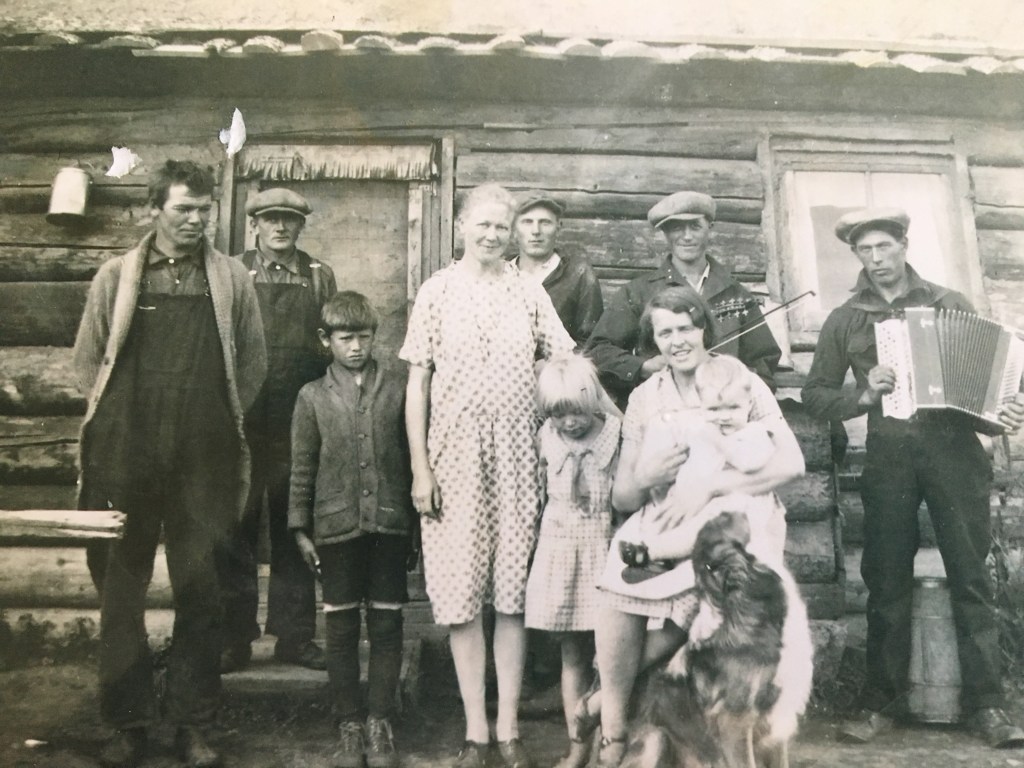
Grampa Espe is holding the violin and standing behind Gramma… Dad is on her knee. Far left is Halvor Gronseth, his son Ole is beside him. Mrs. Maria Gronseth and their daughter, Gunhild are next to my gramma. (I don’t know who the two men in the back, or the man with the accordion are… do you??) 1933, I think.
My grandmother used to tell me about what it was like to live in Montney during the years before I was born. In 1931, she and Grampa moved on to their homestead in the valley. They built their first log cabin and began to clear and work the land. Gramma gave birth to my dad the next summer.
One of her favourite stories (and mine) was about an October rainstorm when Dad was only three months old. She said that it was a dark, windy, and very chilly night. The rain was coming down sideways. The sod roof on their cabin began to leak in muddy streams. Grampa valiantly climbed on to the roof to try and do some patching while she huddled with their new baby under a small wooden table… the driest place she could find.
After doing all that he could, my wet and shivering Grampa came back inside and slid under the table beside Gramma and the baby. It was pitch dark so he lit a candle. Gramma said that when she looked at his face and saw the lines of mud running from his hair into his ears and across his face she began laugh. She said it wasn’t long before they were both giggling about how they must look curled up under the table in their mud-covered state. She would be laughing her wonderful laugh while she told the story which she told often.
As I got smarter, I realized that in addition to living in a small log house with a dirt roof, they had no running water, no indoor toilet, no radio, no telephone and nothing even close to electricity (let alone TV, internet, or cell phones!). Neither did their neighbours, the nearest of which probably lived a kilometre away. There were also no yard lights in the valley like there were when I grew up there.
They were basically alone in the cold and dark most nights and considering Montney is located some 56’ north of the equator, the winter nights were numbingly long. Being alone, with only each other to talk to and maybe a puzzle or deck of cards for entertainment is hard to imagine.
Interestingly, we just had a no-power experience of our own a few days before Christmas. We were without power for 77 hours (3 days and a bit) after, what I’m told, is the worst wind storm on south Vancouver Island in generations. Fallen trees took out power to over 300,000 homes, and BC Hydro, despite Herculean efforts, took almost a week to get everyone’s power back on. We were extremely lucky in comparison to the many people whose homes and/or vehicles were badly damaged. We are also lucky that we are on Vancouver Island where the temperature did not drop below freezing.
Deb’s scary drive home from Duncan on Day 1.
Pilkey Point Road on Thetis Island.
Once we realized that the power wasn’t going to come back on right away we began to realize how poorly prepared we were. We had about a dozen matches left in a matchbook I’d picked up at a restaurant a long time ago. We also had a pair of decorative scented candles on the mantle. We had a flashlight but the batteries were dead. Fortunately, we later remembered the three headlamps that Deb had bought for snowshoeing a few years back, and the really cool tap-on-tap-off lantern that we’d brought from our cabin. Having a gas stove was handy too.
On day two we were able to find matches, batteries, ice, and candles at the Walmart in Duncan. Then, with not much more we could do, we let the “adventure” begin. During the day, we did some storm clean-up outside, built candle holders and experimented with a homemade ceramic-pot-heater (it didn’t throw off much heat but I warmed my hands by continually checking to see if it was working!). When it got dark, at about 4:30, we cooked, played crib, strummed guitar, made Christmas presents and read books by candlelight. We also did lots of talking about what we are going to do in 2019.
Makari cooking and being “warmed” by the ceramic-pot heater.
Deb and Mak making Christmas presents wearing their handy-dandy headlamps. I hope these gifts mean just a little bit more!
Crib… I actually won some games for a change.
Obviously, I would never compare our 77 hour “adventure” with that of homesteaders like my grandparents, but our no-power experience made us think about how much time they had together without the modern “conveniences/distractions” we have. I imagine that they spent many of their darkness hours visiting friends, playing games, making music, building/making things, and generally just talking to each other… some of the things we may take for granted.
Once the power came back it didn’t take long to slip back into the conveniences that electricity brings (the furnace, Netflix and the World Juniors on TSN, etc.), but Deb and I think that we’ve learned something from our no-power experience that we can take with us into 2019. I hope so!
Happy New Year to you!
Olaf, Kari and Hans Espe. Montney, 1933
Making presents by candlelight. Galiano Island in the distance…
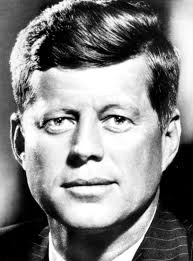
I think most people over 60 will remember where they were on November 22, 1963… the day that John F. Kennedy was assassinated. I’m not quite 61, but I remember the day, and the weeks that followed, very well. In fact, even though I was only 5 and a half years old, I believe the event actually shaped some of my life interests and the career I would choose. I’ll explain.
November 11, 1963 was the day that our family’s first television set was delivered. As you can imagine, I was excited to plug it in and start watching. Up until then I’d really only watched TV at my grandparent’s house. I was looking forward to watching the Lone Ranger, Bonanza and Bugs Bunny on our very own set (it didn’t matter that we had only one channel, it was black and white, and CJDC in Dawson Creek only broadcast from midmorning until about 11 p.m. each day).
One of my most vivid childhood memories is the image of my dad and my Uncle Thor carrying the huge “console” up the three stairs from our store* into the house. The “console” included not only the TV but a radio and a record player as well. It was almost three times as wide as the TV screen and took up one whole wall of our living room. When dad plugged it in, turned the dial to channel 5, and adjusted the antenna, the shows I’d hoped to see weren’t on. For terribly sad reasons, those shows would not be on for the next month or so.
The assassination had taken place in Dallas that morning. Across the world, radio and TV coverage was almost exclusively about the horrific moment in Dealey Plaza and the events that followed. For days, along with my parents, I watched the Zapruder film, the death of Lee Harvey Oswald, and the sad and solemn funeral, over and over again. Mom and Dad were amazingly patient and answered my questions as best they could. They would guide me through the encyclopedia to read about JFK and other presidents. It wasn’t long before I knew that Lincoln, Garfield, McKinley and Kennedy were the four presidents who’d been assassinated, that George Washington had been the first president, Andrew Jackson had been called “Old Hickory” and Ulysses S. Grant had been a union general. One thing led to another and soon I was reading about other generals like Robert E. Lee and George Custer, and chiefs like Sitting Bull, Crazy Horse and Red Cloud. As nerdy as it sounds, by the time I’d finished elementary school, I could name all 37 presidents, right up to Nixon, in order, and as a teen-ager I actually read the Warren Report (that I’m still not 100% sure I agree with). This stuff certainly was not part of the Canadian curriculum so I’m not sure if I’m bragging or complaining… I probably could have found better ways to spend my time! I’m also embarrassed to say that I took so little interest in Canadian history in those days (my excuse, in hindsight, is that the USA did a better job of writing, and marketing, theirs).
My interest in history eventually led to me becoming a Social Studies teacher. Some great books, some interesting story tellers, and some awesome travel experiences helped shape my career path. I also had some amazing teachers. Four of them deserve special credit… Mrs. Nelson (Grades 4-7 at Montney School), Mr. Jim Norris (Grade 10 Social Studies at North Peace Secondary), Mom and Dad.
I guess I should also express my appreciation to the person who sold my mom and dad the Encyclopedia Britannica!
(* My parents owned the Montney General Store. We lived in the back… three steps up! It was an amazing place to grow up.)
Standing in front of the “console” in dad’s hockey equipment. Hockey was another interest of mine.
It’s been a long time since I’ve written anything. I’ve been busy and, for the past 5 weeks, was nowhere near my computer.
On October 2 Deb and I travelled to Europe to celebrate her retirement and visit our daughter who is on an exchange at a university in Austria. The trip was full of many unique and wonderful experiences but, because we are hours away from Remembrance Day and its 100th Anniversary, I would like to share the story of our visit to my uncle’s gravesite in Mers les Bains, France.
As I’ve mentioned in a previous post (click here to see it) my Uncle Bert Doonan was a member of the ill-fated Royal Regiment of Canada. He was one of over 900 Canadians killed during the infamous Dieppe Raid on August 19, 1942. He, along with 3 other Canadians, are buried near the beach where their bodies were found in Mers les Bains, about 25 km from Dieppe.
I visited his grave in 1979 and Deb and I planned to visit it again on this trip. In early October, a couple days before we were to leave England and travel to Dieppe, we were contacted by my cousin, Gord. It turned out that he and Cathy were in Europe and also on their way to visit the graveyard in Mers les Bains. Gord, being extremely clever and organized, pointed out that October 10 would have been our Uncle Bert’s 100th birthday. It made perfect sense to plan our visit to the gravesite on that day.
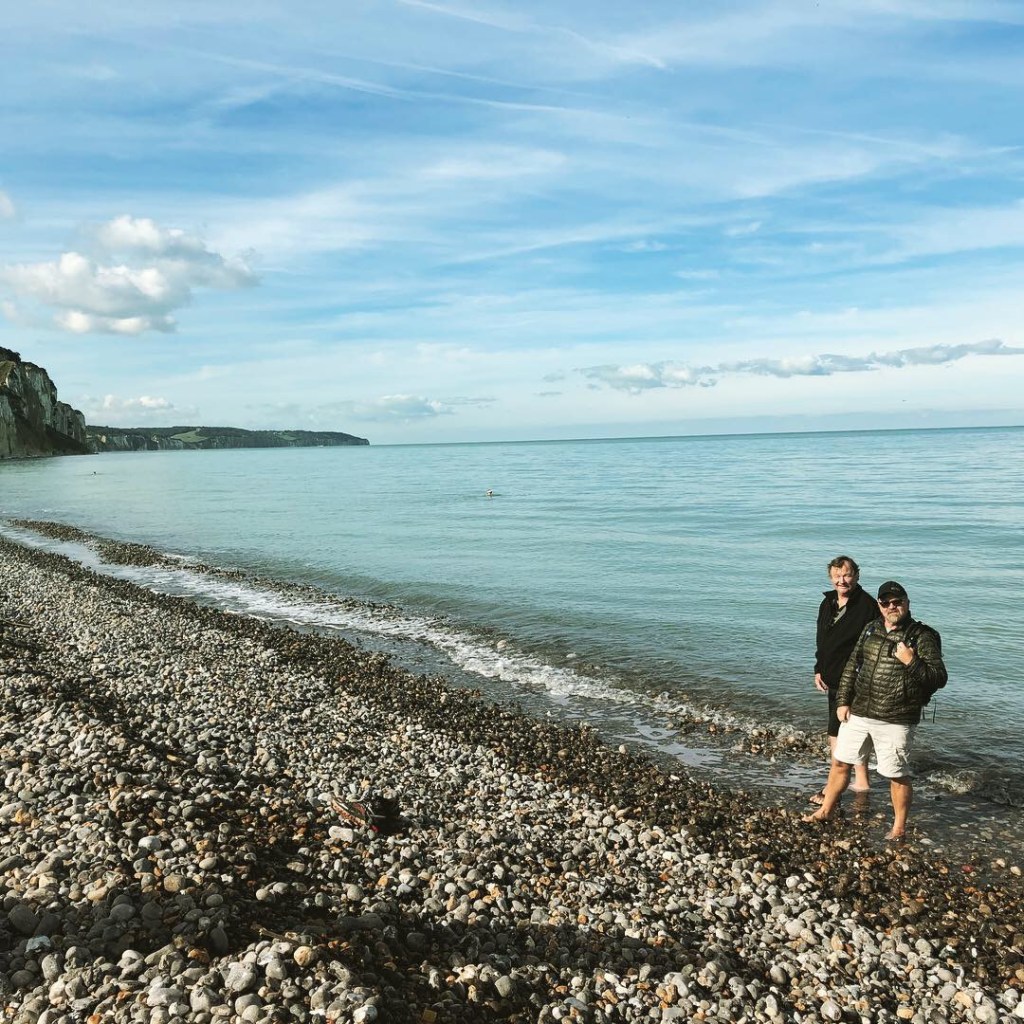
We met Gord and Cathy in Dieppe on October 7 after travelling across the English Channel on a ferry from Newhaven, UK. (I couldn’t help but think about how much different my channel crossing was from that of Uncle Bert.) The next day the four of us walked the Dieppe beach, visited the Canadian memorials and drove out to the Canadian cemetery along the “Avenue des Canadiens”. It was easy to see that Canada has a special place in the hearts of Dieppe’s citizens. We also drove five km east to Puys, the little beach town that had been the target of the Royal Regiment. Its code name in 1942 was “Blue Beach”. Seeing the steep cliffs and rocky, narrow beach made it easy to see why casualties were higher there than anywhere else that day.
On October 9, the day before our planned visit to Mers les Bains, we drove (actually, Gord drove!) the two and half hours from Dieppe to the amazing World War I memorial at Vimy Ridge. I had not realized how massive, impressive and moving the monument, built in 1936, would be. The memorial bears the inscribed names of 11,168 missing Canadians, killed in action in France but whose remains have not been found or identified. The original definition of the word “awesome” is “to be profoundly reverential”… Vimy Ridge is awesome in that sense.
That night we drove back to Mers les Bains and before checking in to our hotel we went to a grocery store to buy a six pack of French beer. The next morning, we made the short drive to the cemetery. The day was sunny but brisk. Unlike my first visit, this time I knew exactly where to look when we entered the walled church yard. The ten commonwealth war graves, including that of Uncle Bert and the three other Canadians killed on August 19, are located along the south wall of the large, old and well-kept community graveyard.
When we reached Uncle Bert’s headstone I felt much the same deep, but indescribable, feelings that I’d felt during my last visit thirty-seven years ago.
We placed a bottle of French beer beside our uncle’s headstone and then opened four more… one for each of us. We saluted Uncle Bert’s 100th birthday with 6.5% beer at 10:00 am on a Wednesday morning. Based on what I’ve heard about the feisty red head, I think it would have put a smile on his face.
To get an idea of the reason we shared a French beer with Uncle Bert on his birthday, please take the five minutes it takes to watch the following video I made in 2005. It’s called “French Beer”… click here to watch
One morning during my first year as a teacher I was sitting at my desk frantically trying to bring my “day-book” up to speed. I didn’t want to be reprimanded (or whatever happened?) for not being prepared to teach the 25 or so kids in my Grade 5/6 class. (The truth is that I should have done the planning the day before, and even more truth is that my principal, who was also in his first year, would have been too busy to worry about it anyway.)
It was about 8:30 am and a group of kids were standing around my desk chatting. I looked up and noticed a little Grade 5 boy patiently waiting for me to acknowledge him. He had curly black hair and a face full of freckles. His elbows were on the desk and his chin was resting his hands. His name was Lance. When he caught my eye, he smiled widely and stood up straight. “Mr. Espe”, he said. “I had this dream last night. You and I were dirt biking and taking jumps and…” He went on and on about the adventure he and I had had while he was sleeping.
I was a 23-year-old rookie who was literally flying by the seat of my pants every day. My priority was to teach (“cover”) all of the prescribed curriculum so that my students would be ready for their next grade. I guess I wanted the kids to like me, but developing relationships wasn’t at the top of my list. Lance’s dream made me re-think that.
I realized that if I was spending enough time with my students each day to become a character in their dreams, I wanted to ensure that I appeared as a positive character… the way I had in Lance’s story. In other words, I didn’t want to appear in their nightmares! It made me realize that when you choose to work with kids you’ve chosen to be “on stage” every day.
I had the chance to re-tell this story just the other day to two special visitors who happened to have been Lance’s classmates.
The visitors, Martine and Traci, were on the island taking part in a 5km run and stopped by on their way to the airport. I hadn’t seen either of them for more than thirty years, so it was a special visit to be sure! (Both “girls”, who had been in Grade 6 when I taught them, now have adult children!)
The visit brought up so many memories. Memories of how little I knew when I started and how much that group of kids actually taught me. Thankfully the memories they shared were positive ones.
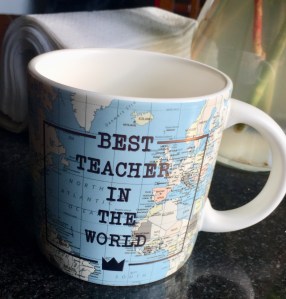
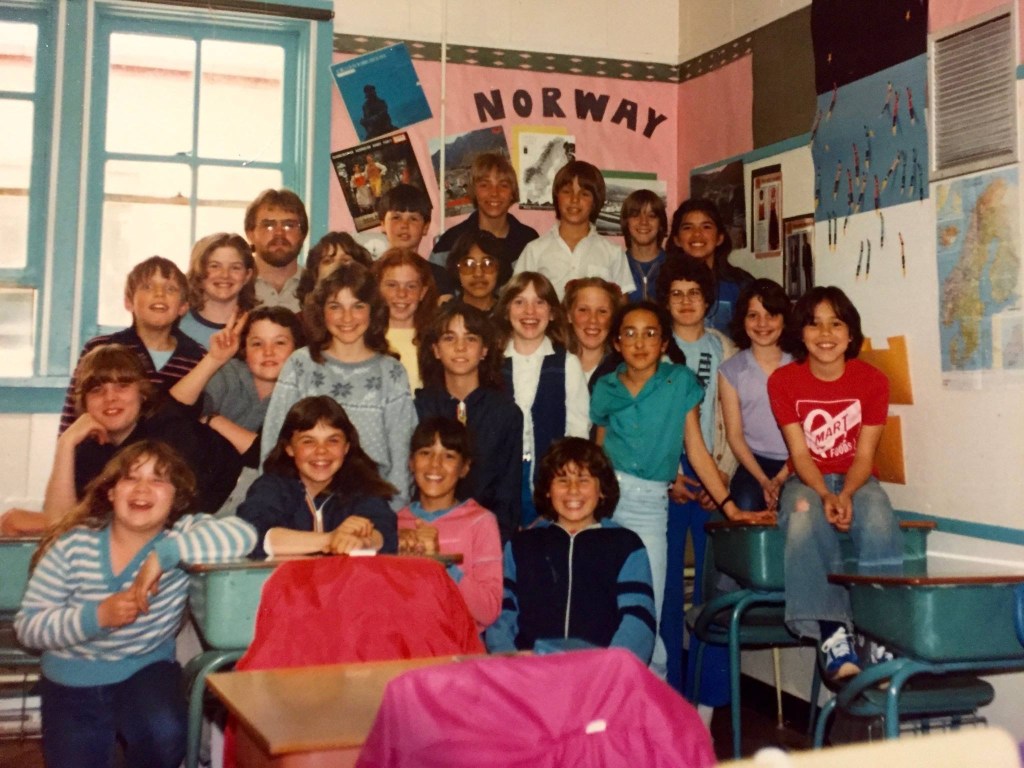
They brought me a “Best Teacher in the World Mug”… the first one I’ve received in a long while! They also brought me a book of Nordic Myths. The inside joke is that pretty much all of the Socials Studies projects I planned that year centered around Norway (I admitted to them that I was just too lazy to change my bulletin board! Check out the picture below…)
Robert Ogilvie Elementary School 1981-82 (Grades 5/6)
After the ladies left, I remembered a blog entry I had written in 2010 while superintendent in School District #60. It was about my first year of teaching…
Leadership.prn.bc.ca, Sept. 6, 2010: “Twenty-nine years ago, I was contemplating my first day as a teacher with my very own classroom. The classroom was an old portable at Robert Ogilvie Elementary and I had a Grade 5/6 class (if my math is correct most of the Grade 6 students turned 40 this year!)
I remember working really hard, and (thankfully) I remember doing some good things for the kids. I also remember doing some things wrong too. The one that really makes me shake my head is the “Race to the Moon” wall display I created to measure student ‘success’ on their weekly spelling tests. I had the students each make a paper rocket with their name on it. The rockets were then lined up along the bottom of the display. Every time a student scored a perfect 10-out-of-10 on a spelling test they got to move their rocket one step closer to the great moon that I’d made out of yellow construction paper. By the end of October several kids were well on their way. Sadly… several others had yet to lift-off at all. I can’t remember exactly how I explained it to the high achievers, but one night the moon and all of the rockets came down (and probably went into the garbage because we didn’t do much recycling then).
I fondly remember the tenth of May that year and I think it is very special that so many of the students in the class do too. My first child was born on Sunday, May 9th that year. On Monday morning when we did our weekly handwriting practice I had the students write my son’s name and birth date several times each…
It was a great year but I’d like to have known then what I/we know now about learning. I wish I had spent more time talking with colleagues about what was working and what might work. I wish I’d had Twitter to communicate with teachers around the world about exciting things to try.
I wish I could have had the kids write their own blogs instead of making rockets with their names on them.” (For the link to the original blog click here.)
Martine, Traci and I reminisced about some of the stories above, but both girls said that one of their fondest memories was the orienteering field trip to Montney that I had planned as a year-end activity. I’d made orienteering maps of the creek bank just west of the Montney ball diamonds. I sent the kids, in groups of 3 or 4, to find their way to the final destination where the wiener roast and home-made ice cream would be waiting. I think I had done a pretty good job of teaching the kids some basic compass and orienteering skills but thinking back I can’t believe I sent them into the bush hoping they’d all come back! I’m so glad the girls remember the day fondly, but I don’t think the superintendent (whoever it was?) would have been too pleased! In hind sight, I’m pretty sure that I brought all of the kids back??
After all these years, it is nice to know that a visit to Montney was a highlight for my first batch of students, and that taking the time to create experiences outside of the formal curriculum helped to engage kids as well as establish relationships.
Here’s hoping that I don’t appear in too many nightmares!
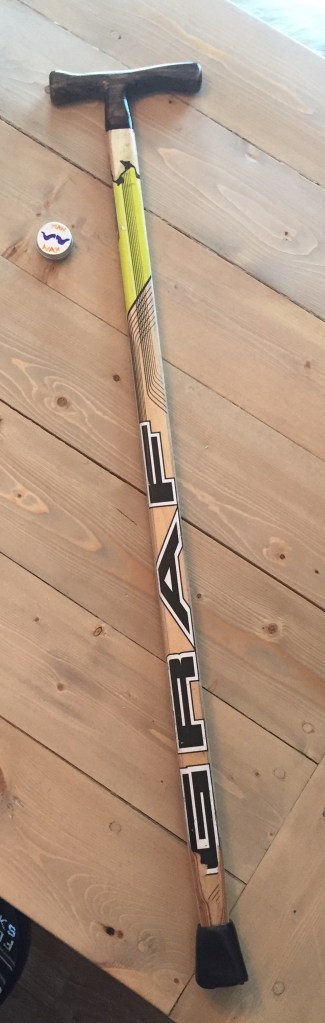
My 60th birthday gift from Cy. Who knew it would come in so handy?!
About a month ago I woke up in the Victoria General Hospital with a Dr. Fleetwood standing at the foot of my bed. Turns out this guy is one of the top ten neurosurgeons in the world. He seems friendly and kind. He is also a busy man. He came in to confirm what the resident had already told me about my MRI results. I’m typing this, so most of it was really good news.
I’ll go back a bit.
I left for the Faroe Islands to make a couple of presentations on April 15th. The trip was awesome and I think my sessions went well enough. I flew home via Iceland and had planned two days of being a tourist. I didn’t feel well when I landed but managed to walk around Reykjavik one day and take part in a bus tour the next, however I was in my room and in bed by about 7:00 pm each night. The last day I went to the airport early and just chilled. The flight home was ok but I didn’t sleep. When I landed in Nanaimo, Deb thought my face and eyes looked different, but we just chalked it up to ‘jet lag’ (which I normally don’t believe in).
The next day, April 25, I went to see my daughter because I’d missed her birthday. I told her I was a bit dizzy from the journey and didn’t really feel well. Again, we chalked it up to ‘jet lag’.
The next morning, I had full-on double vision and what felt like a hangover. I felt even worse the next day so I went to see an optometrist. She was awesome. She told me within ten minutes that the issue was not my prescription and she wanted me to see an ophthalmologist right away. I was thinking a week or two. She made a phone call and thirty minutes later I was in the ophthalmologist’s chair. His initial guess was that I’d suffered a small stroke in my face that had thrown my right eye out of whack, but he booked a CT scan just to be sure.
I was surprised that he could ask for the scan on a Friday and have me scheduled for Tuesday morning. I’d heard about long waits so I was pleased.
After a weekend at home in bed or on the couch with my eyes closed, Deb drove me into Duncan for the scan. He called with results just after noon the same day to tell me that I had a “lesion” or “cyst” behind my right ear. He also told me that he’d scheduled an MRI for the following Monday in Nanaimo. Again, I was impressed by how quickly he was making things happen. Impressed, but also a bit worried (“What’s your hurry?”…was running through my mind).
Thankfully, Deb was able to be home with me because my vision, nausea and balance kept getting worse. Two days after the CT scan I was violently sick to my stomach and could keep nothing down. The phone calls that Deb made suggested a visit to Emergency so, although the car ride felt quite a bit like a tilt-a-whirl, that’s where we headed. It was May 3.
The truth is I expected to wait a few hours and then be sent home with a pain-killer of some sort. Instead, within ten minutes, the triage nurse had admitted me and I was sporting an open-backed gown and IV tubes. Shortly after that a resident informed me that I would be receiving another CT scan right away. Apparently, they had shared the first scan with a neurosurgeon at Victoria General and he wanted another head scan as well as a full body scan. Within an hour or so the resident came back to tell me that she had called the ambulance and that I’d be transported to Victoria within the hour. It’s hard to describe how I was feeling, but I could tell that Deb and Britt were a bit worried.
It turned out that they couldn’t have a bed ready that evening so the trip was delayed until the next morning. They gave me some really good drugs so I actually slept well and, in the morning, I was able to tick “ambulance ride through the Malahat construction zone” off my bucket list. I was strapped onto the stretcher and slid into the ambulance facing backwards… just like the movies. We’d hardly made it out of the parking lot when the attendant riding in the back with me had to put Gravol into my IV drip and I had to apologize for making a mess. Deb and Britt met me in Victoria. Deb thought I looked like hell when I arrived. I felt like it too.
After I was admitted and wheeled up to the 6th floor I was told that I was booked for an MRI first thing the next morning. I was also told I’d been assigned to Dr. Fleetwood and that Tuesdays were his “surgery days”. I started to brace myself.
Carol and Mike, my sister and brother-in-law, flew in from Calgary that morning. When I thanked them and told them they shouldn’t have gone to all the trouble and expense, Mike told me that he wasn’t there to take care of me, he was there “to take care of my girls”. I get tears in my eyes just thinking about their support… it meant a lot for them to be there. (In fact, the support I’ve received from everyone has been amazing and probably deserves its own blog post at some point.)
That afternoon (it was a Saturday), I had a visit from the resident, Dr. Mostafa Fatehi. I liked him right away and he inspired my confidence. He looked and sounded like a movie star. He was there to give me his interpretation of the MRI results. First, he told me the mass, called a cavernoma, was not cancerous. That was the really good news. His “however” was that the mass was located on a part of the brain that made it extremely risky to operate. He said that had it been on the outside of the brain he would “go in tomorrow morning and take it out myself”. He told me that as good as Dr. Fleetwood was, he doubted he would take the risk. I was actually disappointed because surgery is what I’d been bracing for. Although the thought of it was a bit daunting, I was thinking they’d go in, take out something the size of a Jube Jube, and then everything would pop back into place.
Dr. Fatehi explained that they couldn’t really make a full diagnosis without removing it, but he was sure that Dr. Fleetwood’s “determination” would be the same as his. I would have to live with some “deficits” (vision, hearing, balance issues) for about ninety days but that in about 80% of cases the “thing” would reabsorb and I would be all “better”. He did mention that statistically it was likely I would have more “events” in my lifetime “possibly 2, 5 or 10 years from now”. As I listened I realized that, compared to some of the other people on the 6th floor, I was hearing some very good news.
I spent a total of eight days in the hospital. I was given steroids to reduce the pressure in my head and some stuff for nausea. I lost my lunch a few times and found walking to be a challenge. I soon learned that visiting hours are limited on that ward because sleep is pretty important.
Dr. Fleetwood arrived on Thursday morning, May 10, to confirm what Dr. Fatehi had said. He told me that the mass I have is now referred to as a “cavernous malformation” instead of a “cavernoma” because the “noma” part tended to make people think of cancer. Good to know. He also told me I was now his patient and that he’d be following up in the weeks to come. He too inspired my confidence.
It was decided I could start my recovery at home so I was released from the hospital the next day and Deb drove us back through the Malahat to Chemainus.
Since then I’ve had more good days than bad, but I’m realizing that they actually meant ninety days and that a cane can actually save you from falling over! (I’ve teased Cy that the cool hockey stick-cane he made me for my 60th birthday may have jinxed me, but the occupational therapist tells me it is just the right height and exactly what she would have prescribed. I use it every day.)
I’ve spent the past three weeks mostly sleeping and sitting on our amazing deck. It’s not the worst gig. Another upside is that I’ve seen Deb more in the past month than I’ve seen her in the past two years (thanks to Rod Allen and the SD #79 staff for their amazing support). I was also surprised to find that I’d lost more than twenty pounds. Normally that would put a smile on my usually chubby face but, sadly, my calves haven’t been this skinny since I was eleven years old. My appetite is coming back and Deb is a great cook so I think I’ll be ok!
The other thing I’ve done lots of in the past weeks is think. Although some of it is worry, most of it has been about what I want to do with the rest of my life. I was told I need to keep my blood pressure stable and to avoid smoking. My blood pressure has always been quite good and I don’t smoke but I have also been thinking about what else I can improve. I want to improve as a husband, father, grandfather and friend. I suppose that sounds hokey but it’s true. I want to take nothing for granted. I want to go on more road trips. I want to stop being sarcastic. I want to learn more on the guitar. I want, and need, to stop sweating the small stuff. I want to offer my kids the right amount of love and support… and quit being a nuisance. Bottom line… I want to be a better guy. I want to be more like my dad.
********
The support I’ve received from friends and family has been overwhelming. Thanks to all for the cards, baskets, flowers, e-mails, texts and visits… I can’t say enough.
I’ve been given two home-made quilts… made for me by some great people in SD #60 and some great people in Sd#79.
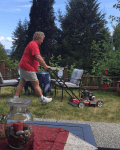
My cousin Lance drove from Alberta to mow our lawn and Karen washed our windows. Cousin Gord showed up too… (“Doonan Energy”)
A Martin Backpacker guitar… a gift from Rod, Jan and Jenn. Such a cool reason to start playing again.
Post Script:
I’m proud of myself for not saying or posting sarcastic comments on social media (i.e. Facebook) for the past few months, and I apologize to those I may have offended in the past. I realize how divisive those quotes, pictures, and memes really are. They tend to drive people either too far right or too far left. I think it is when people get too far from centre that common sense and open-minded conversations stop. Facebook has the potential to connect people in such a positive way and I want to use it for that.
Having said that, after receiving such amazing, genuine and heartfelt care from people with names like Mostafa, Mimia, Gayna, and Omar I find that mean spirited anti-immigrant posts are even more upsetting to me than they once were. If you post one, and I unfollow or unfriend you, please understand why.
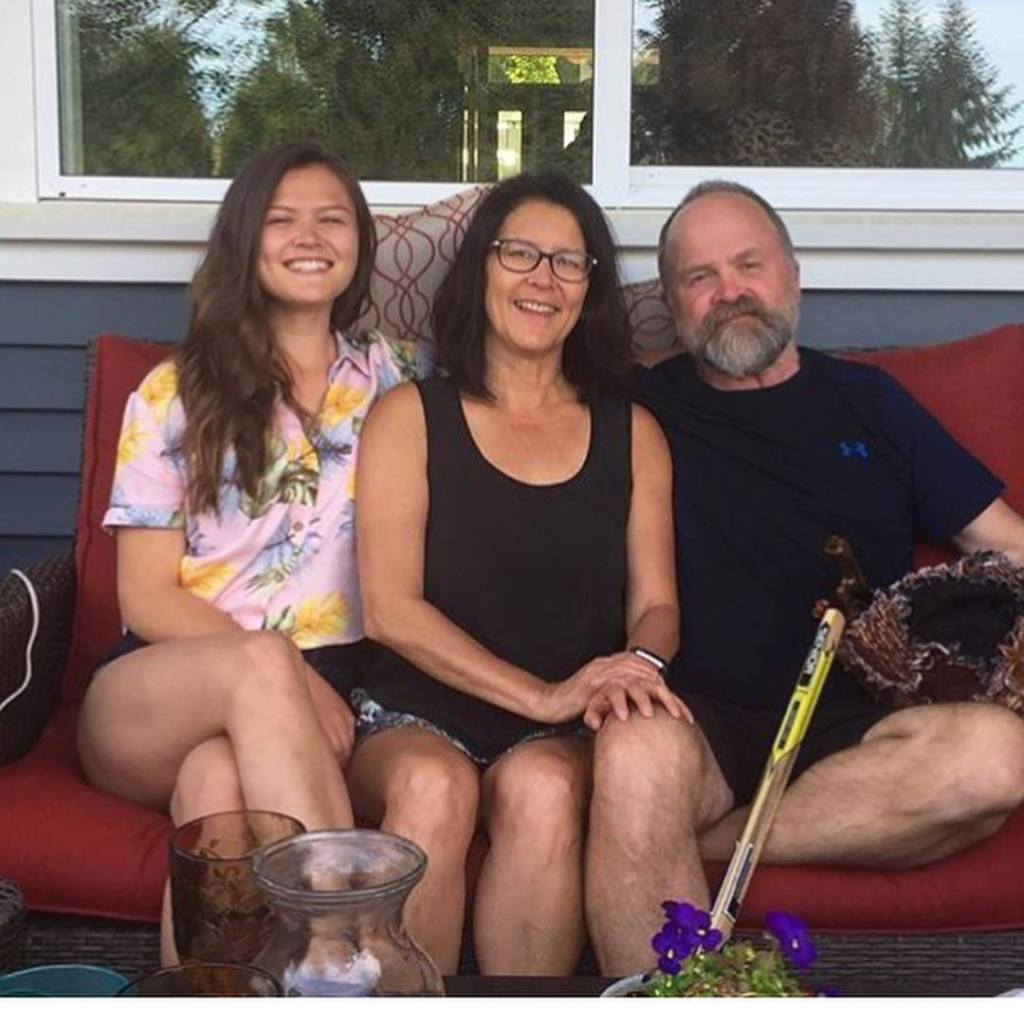
My first day home with Makari and Deb… A pretty special feeling.
I’m typing this as I sit at the airport in Reykjavik, Iceland. I have a layover here for a few hours before I fly to the Faroe Islands for a conference.
This is the first time I’ve been to Iceland, but as soon as we touched down I thought of my Uncle Bert. He had sailed into Reykjavik in early June of 1940 aboard the Empress of Australia as a member of the Royal Regiment of Canada. They were garrisoned here to build roads, improve harbours and set up coast watch stations before being sent to England at the end of October. It looks like he spent almost 5 months here.
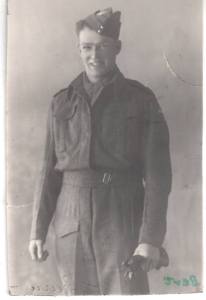
Uncle Bert in Iceland – 1940 (not sure about the story behind the head band?)
On August 19, 1942 the Royal Regiment took part in the Dieppe Raid. Things didn’t go as planned, and the regiment suffered the worst casualties of the day. Two hundred sixty men were captured and two hundred, including Uncle Bert, were killed. Dieppe is still remembered as Canada’s worst defeat.
Mom
My mom was only 7 years old when he died so she only remembered fleeting images of him. She told me she remembered her mom crying the day a parcel that she’d sent to Uncle Bert was returned unopened. Other than that, all I’d really been told was that my uncle had died at Dieppe and his body had never been found.
In 1979 I backpacked through Europe for 3 months. The trip started in Norway, meandered as far south as Greece and then back up towards England. My visit to Paris was near the end of the trip. While there I visited “Les Invalides”. It’s an amazing military museum that was once a hospital for Napoleon’s soldiers. As I was leaving I spotted a sign over a door that said “Commonwealth Victime de la Guerre” (Commonwealth War Victims). On a whim I went in and asked if they had any information regarding a Canadian soldier named Bert Doonan. As soon as they found out I was a Canadian and that my uncle had died in the war they became extremely friendly and helpful. I wasn’t expecting much because all I knew was his name and the date of the Dieppe raid. They gave me an address to try that was on the other side of the city. I almost gave up but instead boarded a metro train and found the place. At first the sweet little lady sounded like there wasn’t much she could tell me. I must have looked disappointed because she asked me to wait a bit longer while she tried another filing cabinet. A short time later, in a flurry of rapid French, she excitedly shared the address of his “tombe”. She had actually found the location of his grave… something I had not expected. I was surprised, excited and grateful.
The train ride from Paris to Mers les Bains took about 3 hours the next morning. Mers les Bains is a coastal town about 20 miles north-east of Dieppe, and the piece of paper the kind little lady had given me said his “tombe” was located in the community grave yard there.
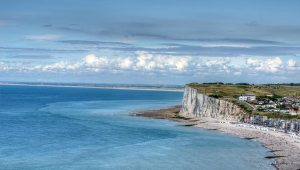
The beach and cliffs at Mer les Bains
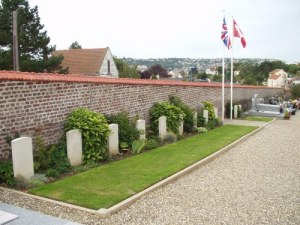
There are ten commonwealth war graves in that big beautiful yard. All are in a row up against the southern brick wall. Six of the graves belong to British sailors, the other four belong to Canadians killed at Dieppe. Uncle Bert’s grave is one of them.
Commonwealth graves in Mers les Bains
I can’t say that I cried when I saw the headstone with his name on it, but what had started as a bit of a treasure hunt all of a sudden became very real. He’d been 23 years old. I was 21. I’d been holidaying around Europe for months and he’d never had the chance. I somehow knew that I’d never take another Remembrance Day for granted.
Since I was there in 1979 several of my cousins have made the trip. I need to go back there too.
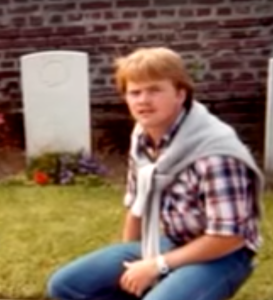
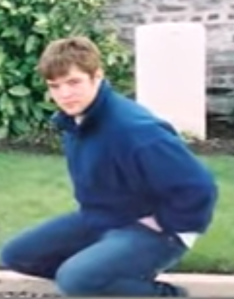
In 2003 my son, Cy was in France and visited the cemetery. He had his picture taken beside Uncle Bert’s grave just as I had done twenty-four years earlier. We put both pictures in the same frame and put it on our mantle.
19792003
In 2005, Dave Stone, a Nova Scotian singer & song-writer, visited Fort St. John to spend time teaching his skills to high school kids. He visited our house one evening to play some songs and have a beer. Being a history buff, Dave was interested in the pictures on the mantle. He asked me to tell the story that went with them so I explained how I’d happened on the grave in 1979. He asked how it felt to find something that no one else had. I told him that although I didn’t actually cry, it had crossed my mind that I’d been able to “party my way across Europe for months while Uncle Bert had never even had the chance to try a French beer.” Being a song-writer, he said, “that’s a good line”. He flew home the next day and a week later he sent me the first draft of a song he calls “French Beer”.
I told the story and shared the song at dozens of school assemblies back in the day. The kids never failed to impress me with their interest and respect.
So… as I sit here in Reykjavik, I can’t help but hope Uncle Bert got to try some of Iceland’s “Egils Gull” lager while he was here in 1940 🙂
Click here if you haven’t heard Dave’s song or seen the pictures.
In the summer of 2004 my mom got some bad news from the doctor. She was raised in an incredible family so it wasn’t long until her siblings began to arrive at her home to offer support. Deb and I spent most of that summer with her too, so although there were times when the conversations were serious and sad, most of the time was spent listening to great old stories and taking part in some sheer Doonan foolishness.
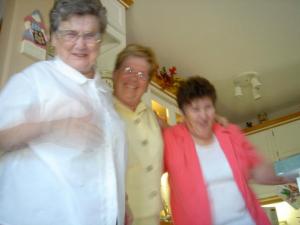
The day of the “photoshoot” is an example. Aunt Ina and Aunt Doris were visiting. Someone decided it would be nice to take a picture of the 3 sisters and I was the chosen photographer. If you’ve ever tried to take a Doonan’s picture you’ll know that not all of them are cooperative at picture time. I managed to get them into the sunlit kitchen but nobody was in a real smiley mood. Aunt Doris was especially anxious to get it over with (“Hurry up and take it, you slather ass!” is what I think I remember her saying).
Thanks to my i-phone having tons of film I just started snapping. I used my very best photographer banter… “Work with me, ladies! Work with me!”. Stuff like that. I tried shots from different angles including some from flat on my back on the floor. The smiles started coming, then the giggles, the laughs, the tears and, finally, the pee.
Mom laughed about that afternoon many times in the months to come, and when her other siblings showed up the pictures would come out… blurry or not. She was lucky to have such great sisters and brothers and I’m lucky to have such great aunts and uncles. I’ve always said, “There are two kinds of people… the Doonans, and those who wish they were Doonans.” 🙂
Almost 10 years later… Makari takes mom’s spot between Aunt Ina and Aunt Doris. 🙂
All 11 Doonan sisters…
Back row l to r: Audrey, Jean, Kay (mom), Rose, Doris, Rhoda Front row l to r: Jess, Ada, Mary, Ina and Myrt
When I was months away from becoming a parent for the first time I decided to learn a few chords on the guitar so that I could play lullabies. With a borrowed guitar and the help of some friends who pushed me to learn some minor chords and to sing from the belly, I was able to fool my kids for several years.
One of the songs they would ask me to sing was called “Daisy a Day”. My eldest daughter especially liked the song and soon knew all the words better than I did. The song is a bit of a sad love story about an elderly couple’s evening walks in a small town and a promise that the old man makes to his wife.
When she was five years old we visited the small town of Chemainus on Vancouver Island. As we strolled down Willow Street past the murals, a candy store, and antique shops we noticed a sculpture of an elderly couple sitting on a bench just steps off of the sidewalk. Her eyes lit up and she asked, “Dad, is that the “Daisy a Day” bench?!” I don’t know what the artist had in mind but, that bench, with its hand-holding couple, has never been anything else to either of us.
My daughter and her husband were married at an amazing island venue near not too far from the town with the “bench”. The wedding was awesome, the bride was beautiful, and I had tears near the surface most of the day. Wedding protocol called for the bride to dance first with her groom, and then dance to the next song with her dad. I’d been told this was the plan but I wasn’t told what the song would be. I shouldn’t have been surprised when it was “Daisy a Day”.
It had been almost exactly twenty-five years since we had first seen the bench that she is now living so close to.
Since then, my wife has taken a position with a nearby school district and we’ve moved to Vancouver Island. We actually live a short walk away from the “Daisy a Day” bench.
During the past few months I’ve been walking downtown about two or three times each week. I often stop to drink tea and read or write for a while at the Willow Street Café (in fact, that is where I am as I type this). The “Daisy a Day” bench is right across the street.
As far as the song itself goes, I guess I could have just downloaded the original version by Judd Strunk (click here to hear him) and left it at that, but it was my version that prompted Britt to name the bench! Pardon me for the recording quality (I just used Photo Booth) and the nervous (somewhat creepy) looks back at the computer’s camera. I didn’t smile because it’s kind of a sad song. 😦
On a final note… It does get cold on the island now and then. I walked by the bench a few days ago and caught the lovely lady wearing a toque. 🙂
One of my favourite all time stories is about a kid named Joe*. I first met him when I was principal at a junior high school in Fort St. John. Joe was shy, soft spoken, kind, and loyal. I could tell had a hard time telling me a lie. He was big brother to three younger siblings. He took responsibility for feeding and getting them to school each morning… even though his efforts often caused him to be late himself. Most evenings he also made their supper. His mom was a single parent with a drug problem. Sadly, by the time I got to know Joe he had significant drug issues of his own.
Not surprisingly, school wasn’t going well for Joe. He was on the verge of either dropping out or being asked to leave. It wasn’t surprising that, with all of the distractions he was dealing with, the traditional curriculum wasn’t a real priority for him. I believe he truly wanted to do well (most of us do, don’t we?) but he was failing miserably.
Luckily, a career program coordinator at the high school called Joe to his office for a candid conversation regarding his trajectory. “Joe, obviously the regular program isn’t doing it for you. Is there anything you can see yourself doing? Is there anything you really like to do?” he said. Joe thought for a moment and then replied, “Well, I really like to cook.”
Joe was then registered in the school’s chef training program. After months of hard work by the chef, the coordinator, and Joe himself, he earned his Red Seal. He’s now a real chef.
Sometime later, in my then role as assistant superintendent, I was chairing a meeting of the district’s Aboriginal Advisory Committee (Joe was aboriginal). The same career coordinator was there to report on the successes of his program specific to aboriginal kids. I was surprised when he brought Joe as part of his presentation. Joe was on his way to work, so he was dressed in his white smock and wearing a short white chef’s cap. He stood in front of the group nervously twisting his cap in his hands while he talked about how the chef training program, and his teachers, had provided him with a career. He also said they had saved his life. He sincerely thanked us all.
As you might imagine, there was not a dry eye in the room. It was one of those days when you are proud of yourself for choosing education as a profession. It was a “feel good” story, for sure.
However, I have to ask, what about these kids? The majority of kids?
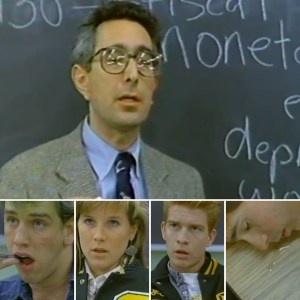
(Click here to watch the classic “Anyone? Anyone?” scene from “Ferris Bueller’s Day Off” – you’ll get the gist by the 30 second mark!)
What about the kids who are polite enough, or resilient enough, to sit through classes like this? In other words, what are we doing for kids who are not as distracted as Joe was? Who is asking them what they really like to do?
Now, I don’t think there are many teachers like this left out there, but I know that many jurisdictions are still dealing with prescribed curriculum that must be “covered” as well as system structures that are not conducive to making learning relevant and engaging. Do you remember those “read-the-chapter-and-answer-the-questions” Social Studies classes? 😦
Fortunately, more and more brilliant teams of teachers are finding ways around standardization and one-size-fits-all structures to create interdisciplinary and authentic learning experiences.
They are also taking the time to create communities of learners where students feel safe with one another and where they work together in order to co-create knowledge. Communities where dialogue and collaboration are not considered cheating.
These teachers are starting to ask their students, just like Joe was asked, what it is they really like to do.
I hope that parents, educators and politicians don’t get nervous and allow the almighty status quo to pull these teachers back to the comfort of compliance… back to “the way we’ve always done it”.
Sometimes the biggest barrier to change is in our heads.
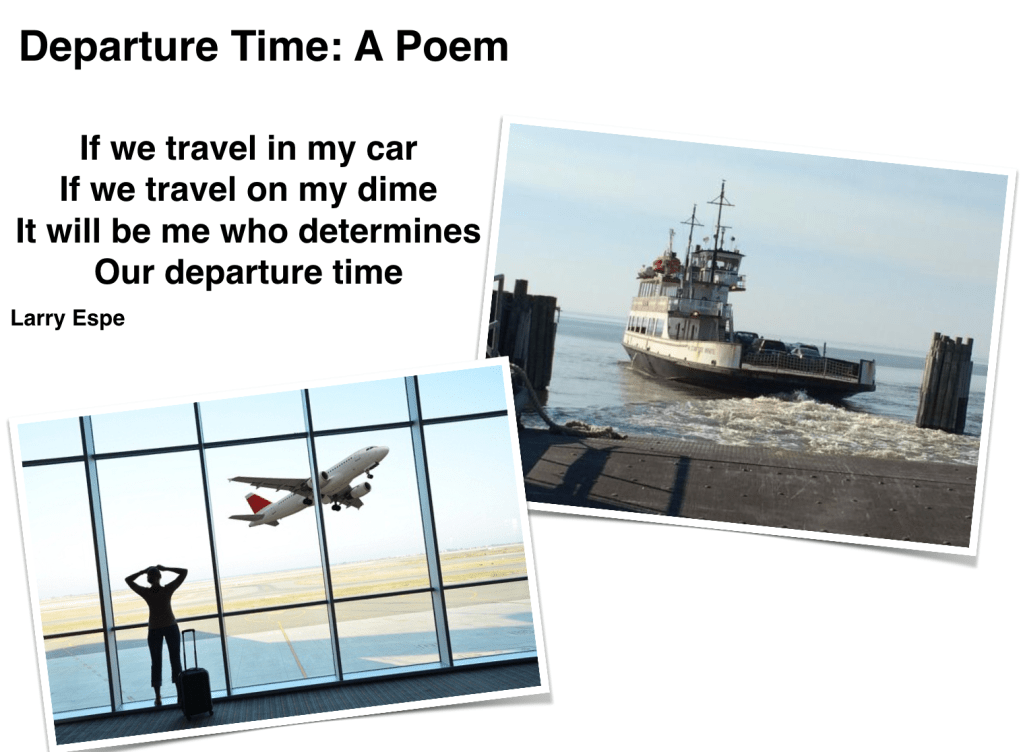
I’ll admit that I probably leave for airports, ferries, and theatres much earlier than I need to. This is especially true if it we are talking about holiday travel. It has meant sitting in waiting rooms, lobbies or line-ups longer than some other people do. That being said, I have never missed a plane (like some members of my family have)!
My kids think it’s funny that I like to be early, and I do get teased a bit. There have even been times when I think they have purposely done things to keep me/us from getting to the terminal at my “comfortable” time.
I decided to write them a poem.
P.S. – Even though the “dimes” are ours, the poem is kinda for Deb too.





 It’s been a long time since I’ve written anything. I’ve been busy and, for the past 5 weeks, was nowhere near my computer.


 inscribed names of 11,168 missing Canadians, killed in action in France but whose remains have not been found or identified. The original definition of the word “awesome” is “to be profoundly reverential”… Vimy Ridge is awesome in that sense.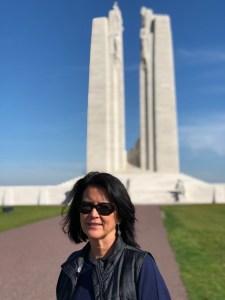





 I’m typing this as I sit at the airport in Reykjavik, Iceland. I have a layover here for a few hours before I fly to the Faroe Islands for a conference.



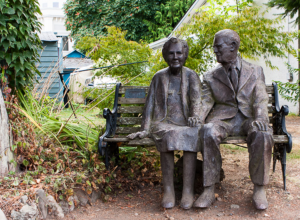 When she was five years old we visited the small town of Chemainus on Vancouver Island. As we strolled down Willow Street past the murals, a candy store, and antique shops we noticed a sculpture of an elderly couple sitting on a bench just steps off of the sidewalk. Her eyes lit up and she asked, “Dad, is that the “Daisy a Day” bench?!” I don’t know what the artist had in mind but, that bench, with its hand-holding couple, has never been anything else to either of us.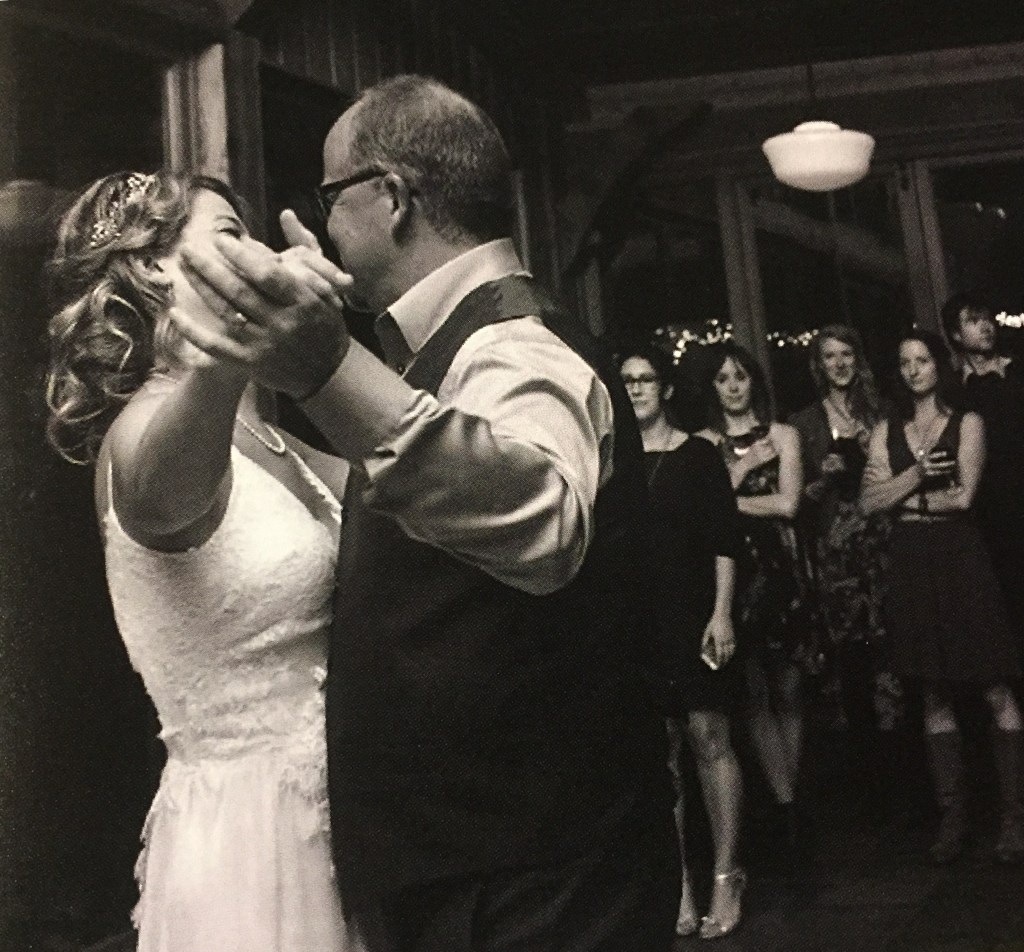

 One of my favourite all time stories is about a kid named Joe*. I first met him when I was principal at a junior high school in Fort St. John. Joe was shy, soft spoken, kind, and loyal. I could tell had a hard time telling me a lie. He was big brother to three younger siblings. He took responsibility for feeding and getting them to school each morning… even though his efforts often caused him to be late himself. Most evenings he also made their supper. His mom was a single parent with a drug problem. Sadly, by the time I got to know Joe he had significant drug issues of his own.


 Montney Boy